Saturday, October 02, 2010

Morgan Conservatory Open House and Auction - Today!

The Morgan Art of Papermaking Conservatory and Educational Foundation is an Ohio non-profit art centre dedicated to the preservation of handmade papermaking and the art of the book. I have met some of the key persons involved in the centre through my attendance at PBI in previous years. For its third year, The Morgan is having their annual Open House and Auction, today, October 2 from 6 to 10pm. So if you are in the Cleveland area, check it out at 1754 East 47th Street.

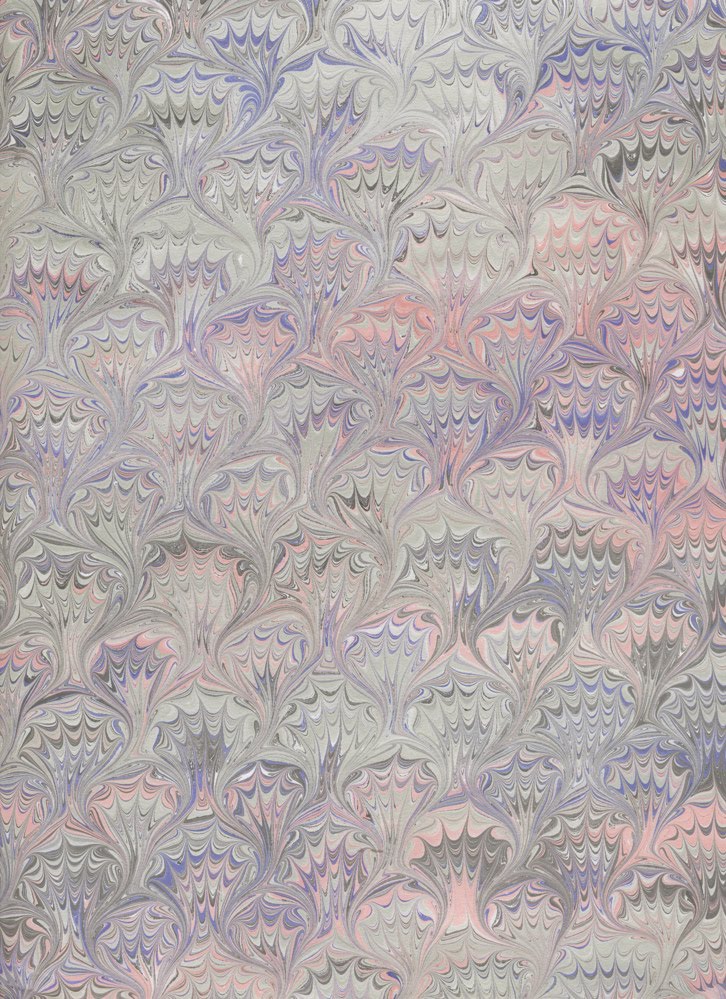
The silent auction will raise funds for The Morgan and its programs. Many of the auction items are made with, from, on, or otherwise featuring handmade kozo paper, made on site. There are also many other art objects for auction as well. Many well known artists, paper makers, and book artists are involved in this event and have made the items for the auction. And some not as well known - in fact, this leather journal, by me, is one of the items available (I didn't have any of their kozo paper to use). It features a full leather cover with an abstract floral detail, with marbled endpapers (marbled by me). Pages are Mohawk Superfine cream.

Wednesday, September 29, 2010

Woodblock Letterpress printing - 3

During our third class I was able to print the second colour on the cards that I started last week. Here's one of the cards coming around on the print roller, with the silver text now printed on top of the black.


I also got some pictures of the bookbinding gear that lives at the Dawson Printshop. You know you want a paper cutter like this one. It can cut through anything - paper, book board, arms...


More gear, presses, hot stamping machine, finishing press... imagine having such equipment at your disposal!


Sunday, September 26, 2010

Discoveries of an amateur marbler

When I first took a marbling class in 2008 with Nancy Morains, she provided a bouquet rake so that we could try making that classic pattern. Her bouquet rake (or double rake) was made to fit her tanks perfectly and it seemed almost effortless! Well, the results from the class were far from perfect, but they were recognizable. Here is one that I did in that class - I think the biggest problem with this is the globby paint, not the technique with the rake. Yikes. After that class, I set myself up to do some marbling at home. Alas, I did not buy myself a bouquet rake because I thought I could do it with two passes of the standard rake. That technique, however, never worked very well for me. So I gave up on it for a while. Eventually, I made myself a bouquet rake and still couldn't get it to look right. I made a substantial effort to improve my bouquet rake technique during my last marbling session. Many papers were terrible and discarded immediately. Many others were mediocre. I could tell they were a little better, but still wobbly and almost out of control with bouquets of all different shapes and sizes. Like this... Then I discovered something. I discovered that my bouquet rake made small bouquets! It started working so much better! I had to nearly stand on my head to watch the pattern emerge as I used the rake, to see what was happening and then it all came together - understanding the spacing of the nails was far more important than I realized. This is probably the best example, so far. As you can see, the bouquets are quite small; but finally, they are nearly consistent in size and shape. Also, a rather successful Frog's foot pattern too (or thistle pattern?) using the same rake. I will continue to practice. Also, I may try to make myself another double rake with more spacing. But after all this, I think I made it over a little hump. If anyone reading this has any advice about making the bouquet pattern, or anything at all to say about it, I would love to hear from you!

Wednesday, September 22, 2010

Woodblock Letterpress printing - 2

Last night I went to my second class of woodblock letterpress printing at the Dawson Printshop. The first project is a simple greeting card and last night I was able to print the first colour on mine. We were using a Vandercook Universal 1 proof press.


Definitely a big part of the fun is looking through the drawers of type, selecting fonts and designing the layout and all that. So, here is the wooden type that I picked out and arranged, set on the bed of the printer and ready to go. ("Bed"? Is that the right word? Still not overly confident with the lingo!) I do like how the extra wooden blocks for spacing are called furniture. (So maybe it is a bed.)


I was the first one to start printing so Niko was using my session as a demo for the class so she is here helping me get started.


In the end, I have the first colour down on the cards. Here are a couple of the test prints -


Another member of the class was taking lots of pictures for me, thanks Radhika!

Monday, September 20, 2010

Preparing for 2011

Every year around this time, I start making these leather weekly planners. So if you are one of those people who come back every year for a new one, here they are, now available on Etsy or Artfire now so you can get ready for 2011. Let me know if you want one made in a favorite colour!

Saturday, September 18, 2010

Woodblock Letterpress printing - 1

Earlier this week, I started a woodblock letterpress class at NSCAD. So for the next six weeks, I'll be playing with wood type. NSCAD is now the home of the Dawson Printshop which used to be at Dalhousie University when I was studying there. So even though it is a new location, it's still familiar. The Dawson Printshop has, literally, tons and tons and tons of equipment and type, both metal and wood. Several antique presses and dozens of huge of cabinets full of type. The instructor is Niko, of White Raven Arts, a fellow member of BEST and an experienced letterpress printer and Dawson Printshop maven. Rows and rows and rooms full of cabinets of type...

Tuesday, August 31, 2010

That special project, followup

The journal project that I mentioned in the last post, will include handmade books from several other bookbinders that are all members of the Bookbinding Etsy Street Team. Here are some of the other contributions:

- Buechertiger
- CinderLisa Design
- Kristin Crane
- Minus + Minus
- Tickerfinch
- PaulinePaulette
- Roundtheworldin80pgs

There are sixteen books that will be "adored and adorned by creative women around the world." Each women will create a 4-6 page story in one of the journals, written and illustrated to show who or what made a difference in their lives and their advice for other young women. A short film will be made to tell the story of the books and the ideas, and the film will be premiered at the first TED Women's Conference in December and the books will be displayed and shared at a gallery event.

Thursday, August 12, 2010

Journals for a special project


Hardcover, flat back binding. Front cover uses my own hand marbled paper. Spine and back are cream Japanese book cloth. Three round windows in the front cover containing seeds and bits of dried flowers. End papers are painted. Custom box.


Soft cover, wrap-around with chopstick closure, longstitch binding. Cover is patchwork leather, adhered to heavy cowhide and hand-stitched. Pages are heavy watercolour papers and end papers are bright red handmade paper. Custom box.


These are two journals that I made for the Levi Strauss company when they contacted me about a project they are doing, The Levi's Anthology. There will be fifteen handmade journals (made by women) sent to various women around the world to fill with their thoughts and ideas, seeking to capture the essence of what has shaped young women, what's relevant to them in 2010, and what advice they would have for other young women trying to shape their own worlds. Ultimately, when the books are completed, they will be featured in a film along with some of the women who wrote within them and the books will be made available for viewing at a gallery.

Saturday, July 17, 2010

Beautiful Books & beautiful baby!

Earlier this week, I visited the Anna Leonowens Gallery, which is an art gallery at the Nova Scotia College of Art and Design. There were two concurrent exhibits that I wanted to see.

The first exhibit was all the winning books of the 2010 Alcuin Society Awards for Excellence in Book Design in Canada. Thirty books were selected for the awards, chosen from 252 entries published in 2009, from 108 different Canadian publishers.

It was nice to see so many beautifully designed books all in one place. I especially liked one of the children's books City Alphabet by Joanne Swartz, which received an honorable mention in that category. It is a modern abcedarian using imagery and words captured in our urban landscape. A couple of the books in the reference category were among my favorites too. Living Proof: the Essential Data-Collection Guide for Indigenous Use-and-Occupancy Map Surveys is a gorgeous book. The title may not sound very exciting to some, but the presentation of the content is irresistible - even if you don't have a penchant for reference books!


I was disappointed to find that the winners in the Limited Edition category were not on display, boo! I would have liked to see those. If you are interested, there is a full list of the winners on the Alcuin Society's blog.

The second exhibit, was Tactile Notebooks and the Written Word. This was a collection of journals filled with all manner of text, image, object, etc, that were created by NSCAD students in a class where their goal was to "to heighten their sensory experience, expand understanding in unexpected directions, and deepen their artistic vision." It was fascinating to flip through these books and see and feel what each of the artists conveyed.


This visit to the Anna Leonowens Gallery was refreshing since I have been just a little out-of-touch with the book world over the past few weeks. Obviously, since I haven't added anything to my blog for over a month! Apologies for that. As some of you know, my little girl Mallory was born on June 20th so she has been distracting me! As we settle into a new routine, I plan to get back into my bookbinding studio occasionally.

Introducing Mallory! Born June 20, 2010

Saturday, July 10, 2010

A little history of the Chain Stitch

Early multi-section Coptic codices Dating from the 2nd century AD, the Copts used a chain stitch to bind multi-section books. In most documented cases, it seems that these books were sewn with a continuous thread and a single needle. The first and last sewing stations thus having half the number of loops as the other sewing stations. There are variations in the chain stitches from this period, though, since the technique was still in development. The cover would be made separately & attached after the textblock was sewn, covering the book completely including the spine. The textblock was attached by pasting it directly to the covers. Later Coptic codies After about the seventh century, there are very few extant Coptic bindings and most remnants are very badly damaged but it is evident that the chain stitch was still used. It also seems that the cover boards started being attached as part of the sewing process – unlike the separate attachment of the cover described above for the early Coptic codices. Ethiopian Codices Dating from about the sixteenth century, chain stitch binding had also evolved in Ethiopia. These books typically had paired sewing stations, sewn using two needles for each pair of sewing stations (so if there are 2 holes, use 2 needles…or 6 holes, 6 needles etc). The covers were wooden and attached by sewing through holes made into edge of the board. Most of these books were left uncovered without endbands. Byzantine bindings There were also Islamic bookbinding methods employing the link stitch, and Byzantine/Greek bookbinding methods using a link stitch. An interesting variation employed by the Greeks was sewing the sections in two groups, then joining them so the chains meet in the middle. This makes it look like the chain stitches change direction in the middle of the row. The Byzantine bindings are more likely to have elaborate endbands which are worked onto supports and anchored to the cover boards through holes in the boards. These books typically had full leather coverings. This quick summary is largely based on information in Szirmai’s text, The Archaeology of Medieval Bookbinding. There are five chapters dedicated to link stitch bindings so this is really a miniscule summary of what I read. There is some debate surrounding the various terms used to described the chain stitch binding methods that are so often used today, especially concerning the very loose application of the term "Coptic binding." Ekthesis has a nice article about the Coptic binding which includes some discussion of these issues. Photo courtesy of The Crafty Kitten Originally posted to the BEST Blog, Oct 2007

Thursday, June 10, 2010

More Patchwork Journals

I had so much fun making the last batch of patchwork leather journals, that I made another batch. These are now available in my Etsy shop, of course. Each of the wrap-around covers are assembled from my heap of leather scraps, adhered to a larger piece of leather, then stitched to keep the pieces secure. Reclaimed buttons and braided cord closures finish the covers. These ones have all blank unlined, new, recycled paper for the pages (rather than pre-used blue-box papers like the last bunch). The binding is a longstitch and chain stitch combination, sewn directly through the covers.

Wednesday, June 02, 2010

More books from boxes

I just have to show some books I recently made by request using fun boxes. Because, not only is it fun to have all the products that are advertised on television, it is even more fun to have notebooks made from the boxes.

The Graty and SlapChop combo, of course.


The Snuggie, and yes, the Snuggie for dogs.

Wednesday, May 26, 2010

Book and paper arts with a 5-year-old

Occasionally, my little boy requests that we make things in my bookbinding studio, and he doesn't mean block towers or Lego towns. Last week he asked if we could make a book. We have made blank notebooks before, just using a basic pamphlet stitch (his first attempt was over two years ago). This time we found printable booklets online so his book would have real content. The layout of the pages made them perfect for a stab binding, so this time Nicholas made his first Japanese-bound book, called "What begins with N?". He wanted yet another project, so we made paint. Using a simple recipe that we found online, we made three pots of sticky paint. This is esentially paste made from cornstarch with some food colouring mixed in. The result was a very translucent paint mixture, and when the papers dried, they were very slick and smooth. Could be a great concoction for paste papers. Some book and paper arts resources, if you have a kid who likes to make things: - Make Paper with Kids - Origami for Kids - Printmaking with fruit & veggies - Preschool Indoor Fun - Make your own mini books - Cereal Box Bookbinding - Making Paper Airplanes

Saturday, May 15, 2010

Marbling

This looks fun, eh? Recently I haven't had time to do anything very new or exciting in the world of bookbinding. I had two local craft markets which took up my time for a while; I also have a couple substantial orders to fill; and I just spent a couple days marbling. I had to make 30 marbled sheets that were all the same... or at least very similar, using the same colours and all with the same pattern... To make up for that, I spent the next day using as many colours and patterns as possible. Here are some examples - zooming in on the patterns:

Thursday, May 06, 2010

Crafter's Market, May 8th

I'm going to be selling my journals at a spring craft market this Saturday!

Spring Crafter's Market!
Date: Saturday, May 8
Time: 10am to 6pm
Location: Halifax Forum's Multipurpose Centre, corner of Windsor and Young Streets.

There will be a fantastic variety of local art and craft sellers. So if you're in Halifax, come by the Halifax Forum's Multipurpose Centre on Saturday. This event is a fund raiser for Feed Nova Scotia so there is a small admission fee, or you can bring a non-perishable food donation in lieu of the admission fee.

This craft sale is perfect timing if you still need to find something for Mother's Day!